Planning to tie the knot in California as a dual citizenship couple? Congratulations! California’s inclusive marriage laws make it a welcoming place for couples from diverse backgrounds. Here’s a step-by-step guide to help you navigate the process smoothly.
Understanding California’s Marriage License Requirements
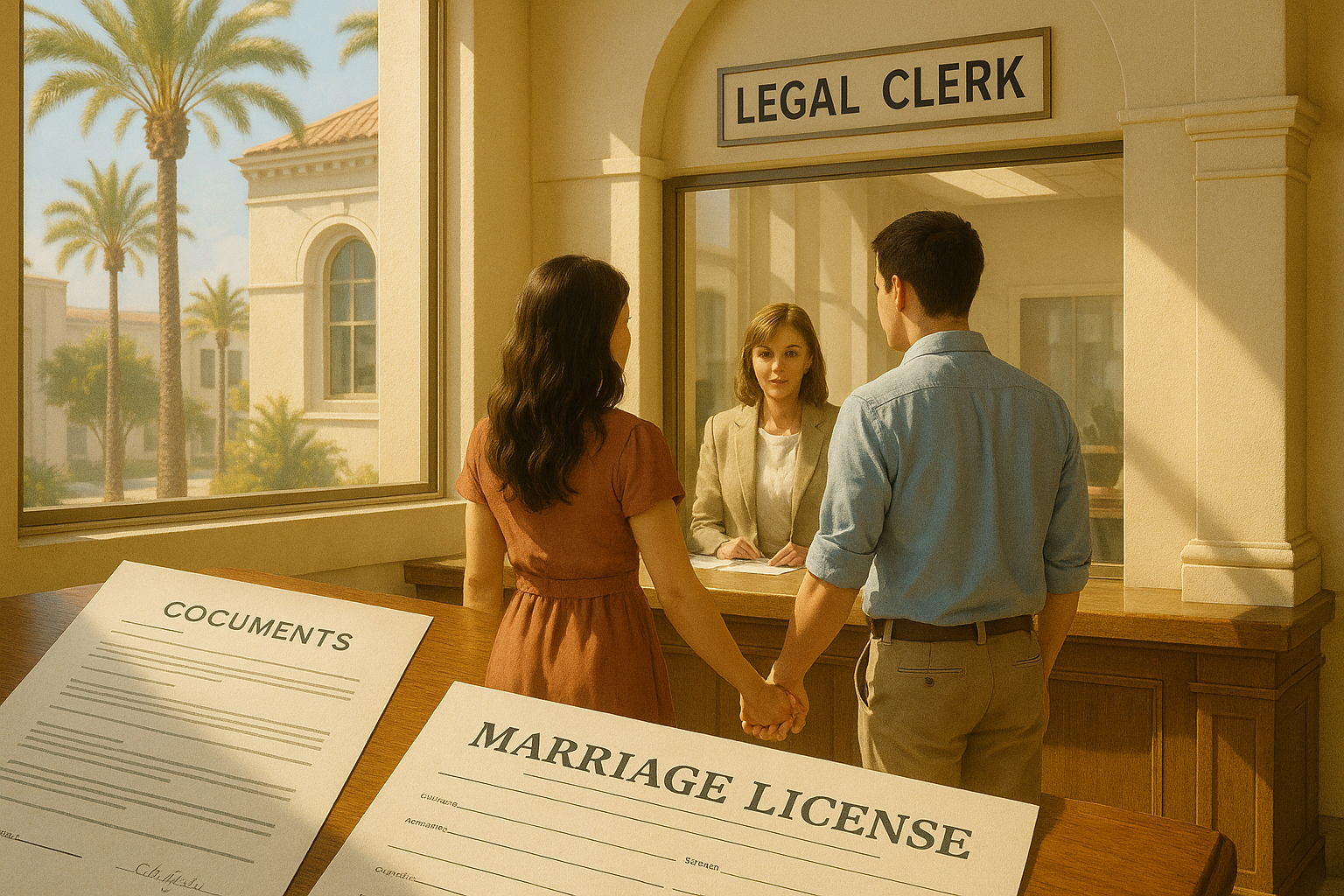
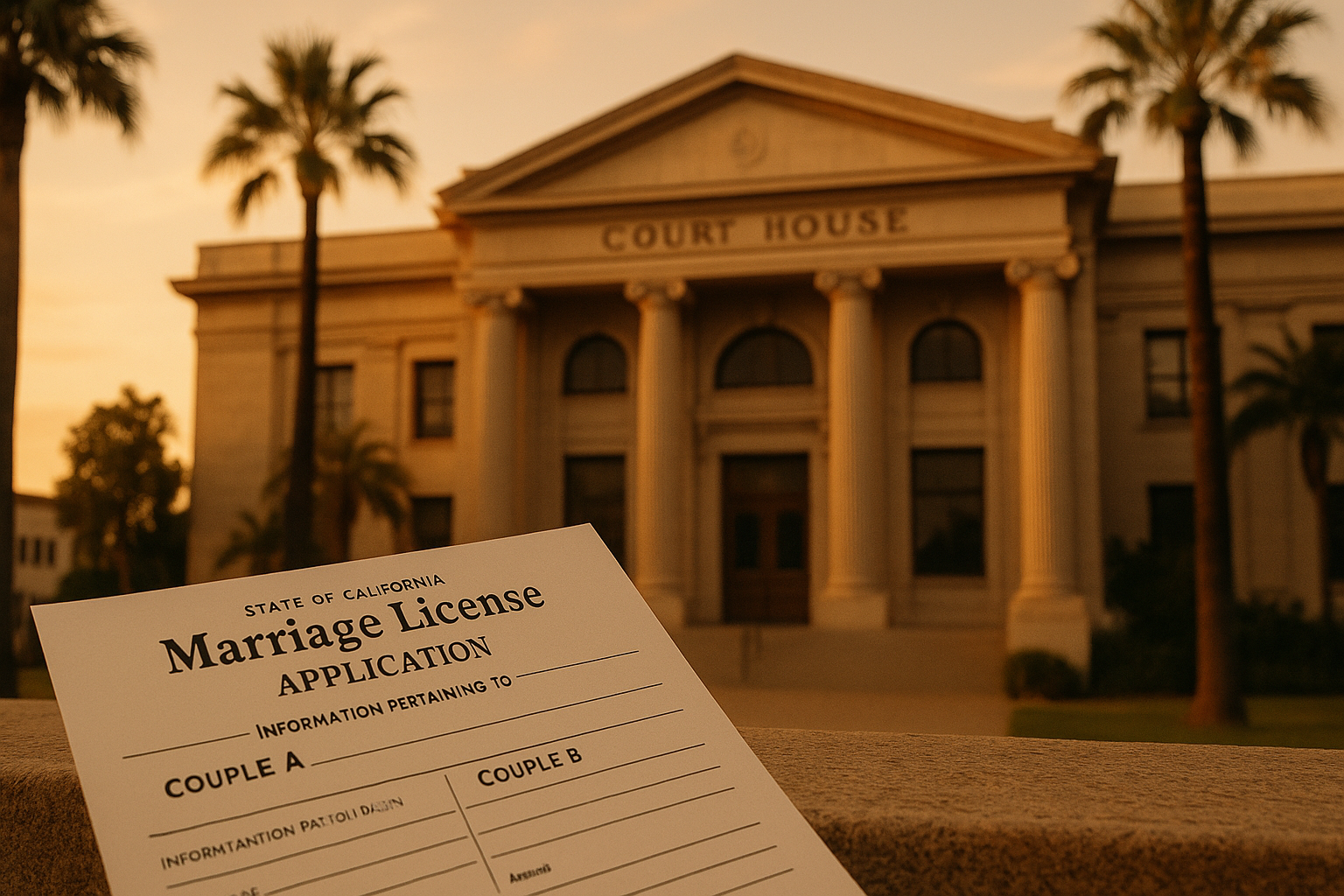
California does not impose residency requirements for marriage licenses, making it accessible for couples worldwide. To obtain a marriage license, both partners must:
- Appear together in person at a County Clerk’s office.
- Provide valid photo identification (e.g., passport, driver’s license).
- Pay the applicable fee, which varies by county.
For detailed information on obtaining a marriage license, visit our How It Works page.
Same-Day Marriage Services: Quick and Convenient
If you’re on a tight schedule, California offers same-day marriage services. Some counties allow you to obtain a marriage license and have the ceremony on the same day. This is particularly beneficial for dual citizenship couples who may have limited time in the U.S.
For more details on same-day marriage services, check out our Locations page to find a convenient office near you.
Ensuring International Recognition of Your Marriage
To have your California marriage recognized in another country, you may need an apostille—a form of authentication under the Hague Apostille Convention. The process involves:
- Obtaining a certified copy of your marriage certificate.
- Submitting it to the California Secretary of State for apostille certification.
For assistance with apostille services, visit our Notary Marriage in California page.
Marriage and Immigration Considerations
Marriage can play a significant role in immigration processes. If one partner is seeking residency or citizenship in the U.S., a legal marriage is a crucial step. However, it’s essential to understand that:
- Marriage alone does not grant automatic residency or citizenship.
- Additional applications and approvals from U.S. Citizenship and Immigration Services (USCIS) are required.
For more information on how marriage affects immigration status, consult our FAQ’s page.
Legal Name Changes Post-Marriage
After marriage, you may choose to change your name. In California, the marriage certificate serves as a legal document for name change purposes. To update your name:
- Obtain certified copies of your marriage certificate.
- Update your name with the Social Security Administration.
- Change your name on your driver’s license or state ID.
- Notify banks, employers, and other institutions.
For more details on the name change process, refer to our How It Works page.
Frequently Asked Questions
Q: Can we get married in California if neither of us is a U.S. citizen?
A: Yes, California allows non-U.S. citizens to marry without residency requirements.
Q: How long does it take to receive a certified marriage certificate?
A: Typically, it takes 5–8 weeks by mail, but expedited services are available in some counties.
Q: Is a California marriage recognized in other countries?
A: Generally, yes. However, obtaining an apostille may be necessary for international recognition.
Q: Do we need a blood test to get married in California?
A: No, California does not require blood tests for marriage licenses.
Q: Can we have a confidential marriage license?
A: Yes, California offers confidential marriage licenses, which are not part of the public record.
Embarking on your marriage journey in California is an exciting step. For personalized assistance and to ensure all legal requirements are met, feel free to Contact Us. We’re here to help make your special day seamless and memorable.