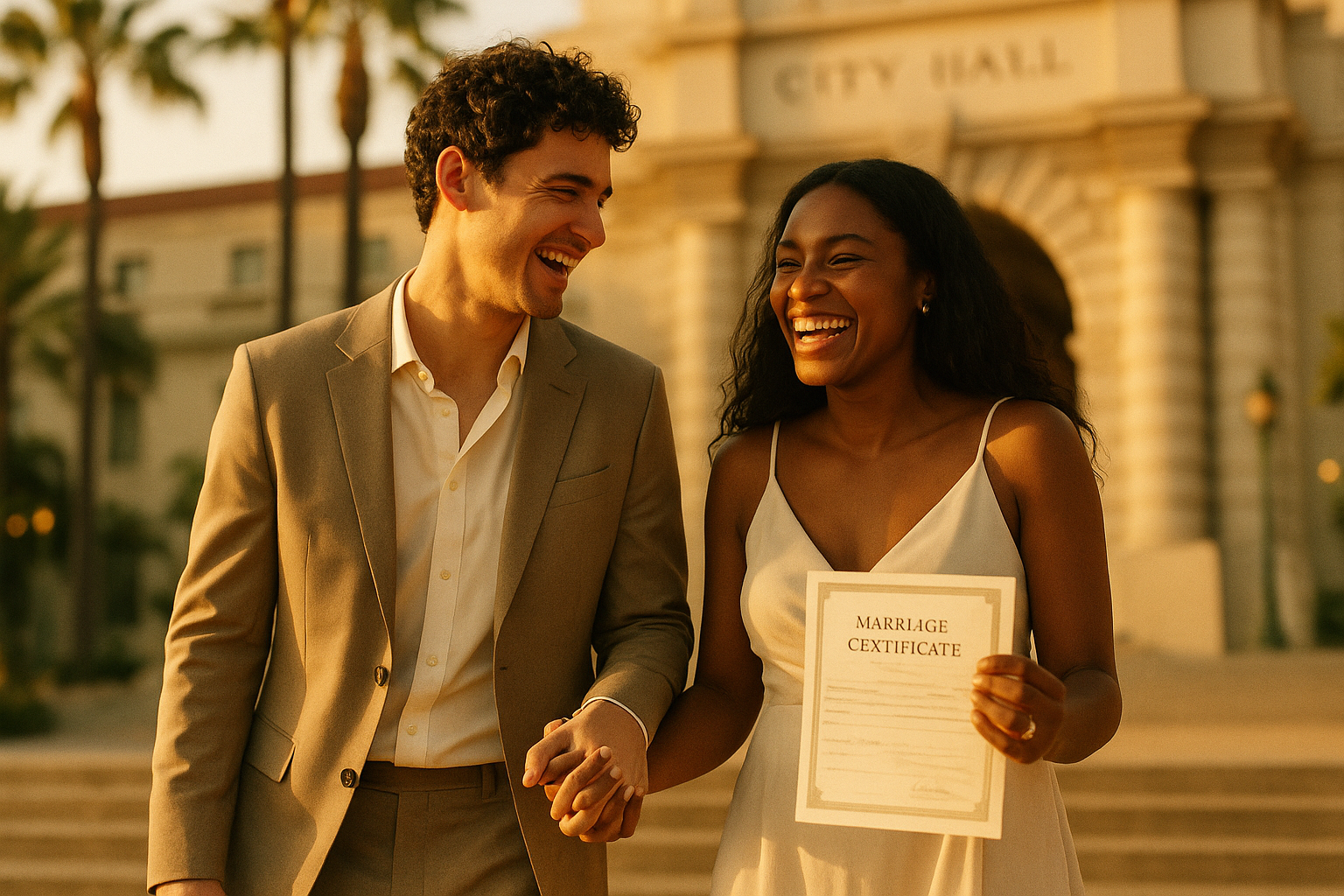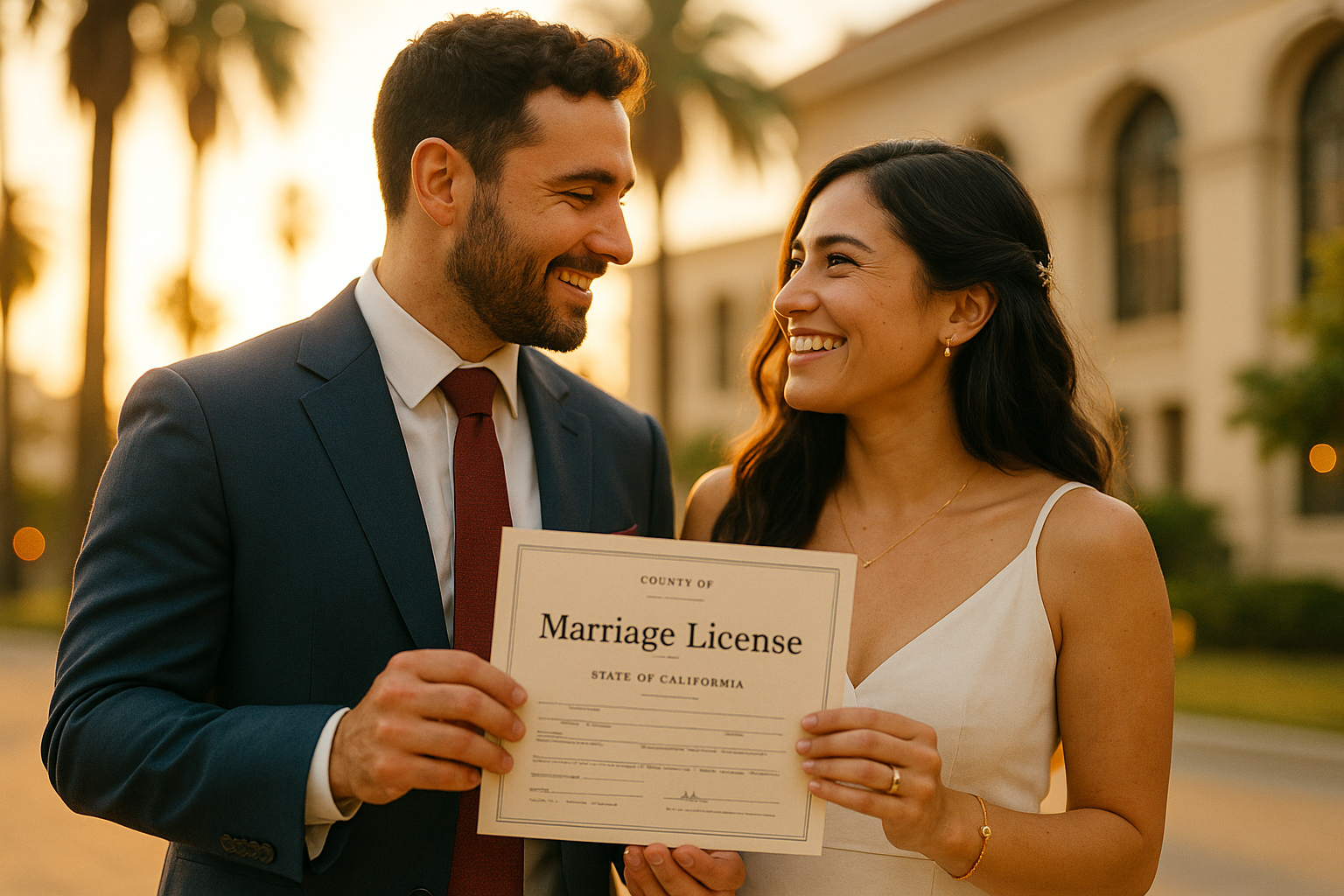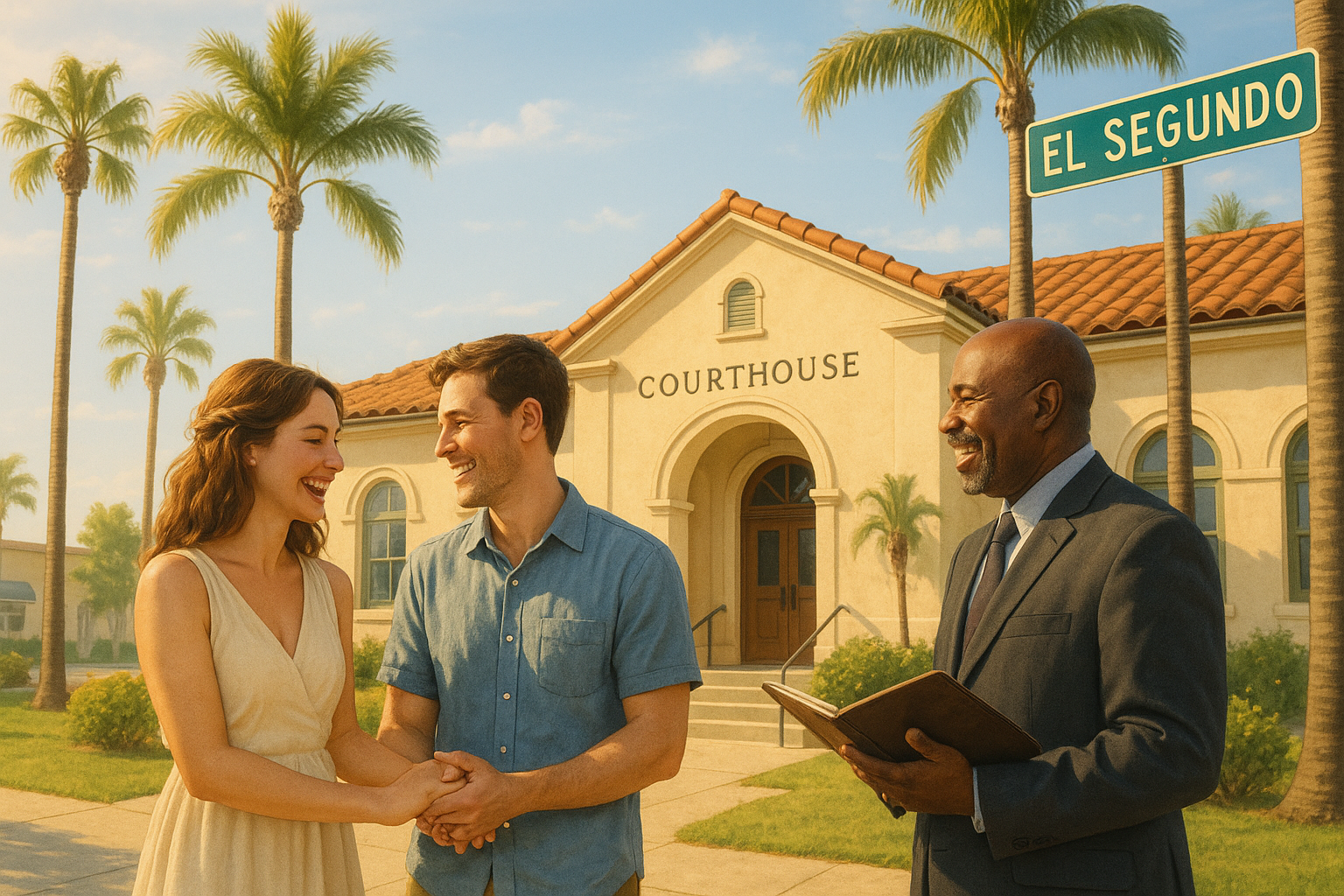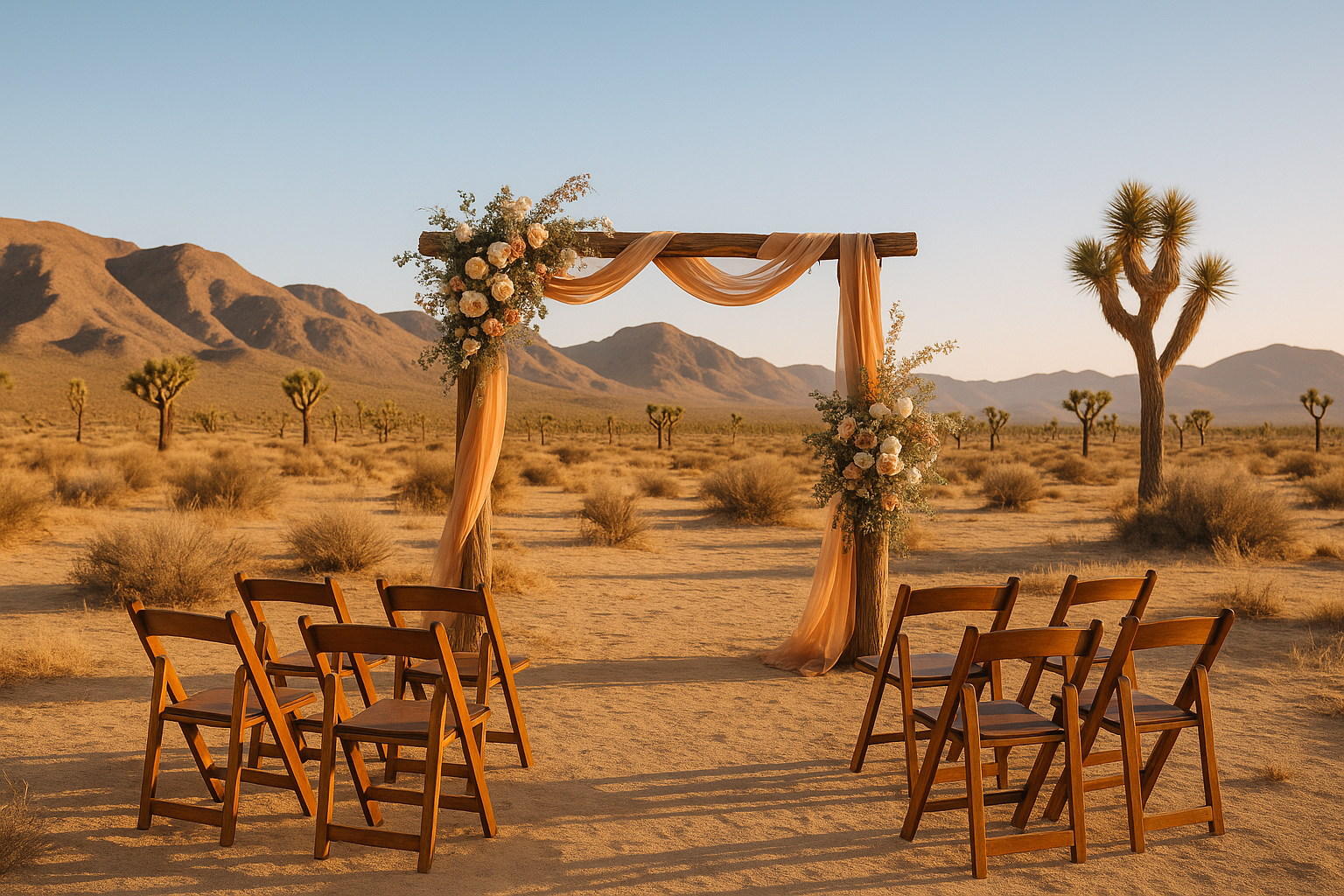
Planning to tie the knot in California but prefer a minimalistic approach with just one guest or none at all? Whether you’re eloping or simply desire an intimate ceremony, understanding the legal requirements is essential. Let’s walk through the process to ensure your marriage is both memorable and legally binding.
Understanding California Marriage Licenses
Before saying “I do,” you’ll need to obtain a marriage license. California offers two types:
- Public Marriage License: Requires at least one witness during the ceremony. This license becomes part of the public record.
- Confidential Marriage License: Does not require a witness and remains confidential, accessible only to the couple. Both parties must be at least 18 years old and living together as spouses at the time of application.
For more details on obtaining a marriage license, visit the California Department of Public Health.
Choosing the Right Ceremony for Your Needs
Depending on your preference for guests, consider the following options:
- Courthouse Wedding: Ideal for couples seeking a straightforward ceremony. Many county clerk offices offer civil ceremonies, often accommodating a limited number of guests. For instance, the Sacramento County Clerk’s office allows ceremonies with varying guest limits based on the location. Learn more here.
- Private Ceremony with a Confidential License: If you prefer no guests, a confidential marriage license allows you to have a private ceremony without the need for witnesses.
Steps to Get Married with Minimal Guests
- Obtain a Marriage License: Schedule an appointment with your local county clerk’s office. Remember to bring valid identification and any necessary fees.
- Choose an Officiant: California law requires an authorized person to solemnize the marriage. This can be a religious leader, judge, or a deputized individual.
- Plan Your Ceremony: Decide on the location and any minimal details to make the day special.
- Complete the Marriage License: After the ceremony, ensure the officiant and any required witnesses sign the license. Return it to the county clerk’s office within the specified timeframe to receive your marriage certificate.
Frequently Asked Questions
Q: Can we have a self-uniting marriage in California?
A: California allows non-clergy marriages for members of certain religious societies without clergy. However, this still requires proper documentation and may necessitate witnesses. More information here.
Q: Is a wedding ceremony required to be legally married?
A: Yes, a ceremony is required, but it can be simple and private. The key is to have an authorized officiant and, depending on the license type, the necessary witnesses. Read more.
Q: How soon can we get married after obtaining the license?
A: California has no waiting period. You can marry immediately after obtaining your license, making same-day marriages possible.
Q: Do we need to be California residents to marry there?
A: No, California does not have a residency requirement for marriage.
Q: How do we obtain a marriage certificate after the ceremony?
A: After the ceremony, return the signed marriage license to the county clerk’s office. Once processed, you can request certified copies of your marriage certificate.
For personalized assistance and to ensure all legal requirements are met, feel free to contact us. We’re here to help make your special day seamless and memorable.